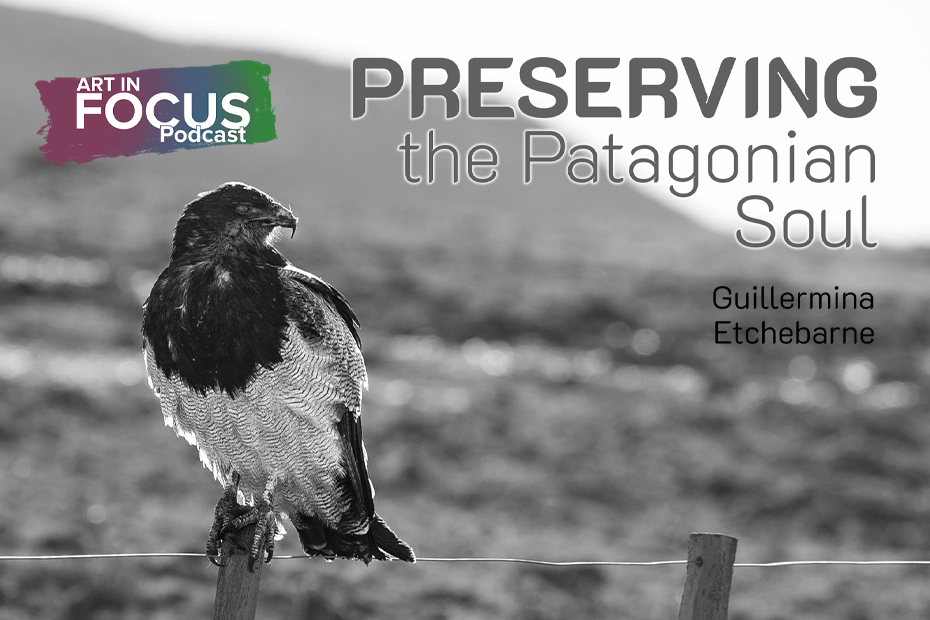
Photographer Guillermina Etchebarne on trading city life for the deep south of Argentina, and using modern technology to archive a fading rural tradition.
I recently had the pleasure of catching up with photographer Guillermina Etchebarne to record an episode of the Vieunite Art in Focus podcast. Joining us from her ranch in Patagonia, Guillermina shared her journey from the bustling streets of Buenos Aires to the quiet expanse of southern Argentina. It was a fascinating conversation about the intersection of nature, time, and photography. You can watch the full interview via the YouTube video embedded at the bottom of this page.
Documenting Wilderness
In the far south of Argentina, the weather sets the schedule. For Guillermina, nature dictates the rhythm of daily life. The environment is rugged, characterised by constant wind and heavy winter snow. It is a stark contrast to her upbringing in the crowded, noisy capital.
She moved to this vast territory for love, embracing a genuinely wild existence. Her home initially had no electricity, relying entirely on candles before the recent introduction of solar panels. Yet, it is within this isolation that she found her photographic purpose.
Her work focuses heavily on the local gauchos, the traditional rural workers of Argentina, and the raw wildlife of the region. There is a quiet urgency to her practice. As she notes, “We are losing the silence. We are losing all these excellent or perfect things that people from the inside of the countries do, the industry and technology are taking a lot of that”. Her portraits act as a visual archive of a lifestyle that is slowly fading. “I really want to be sure to have all these photos because I don’t know how much we’re going to have this,” she explains.
There is an interesting paradox at play here. While Guillermina seeks to document a world untouched by modern industry, she relies on technology to do so. She trained her eye partly through online study, and today, digital innovation allows her work to cross continents. Our interview was recorded via an internet satelite link.
Through platforms like the Vieunite Textura canvas, alongside her traditional museum-grade prints, the stillness of Patagonia can be quietly transmitted to audiences thousands of miles away. In a domestic setting, displaying her work offers a window of quietude, bringing a sense of natural space into a busy modern home. Equally, in a corporate or business environment, these expansive landscapes provide a grounding moment of reflection for staff and visiting clients alike.
For Guillermina, the ability to “share a little piece of Patagonia with people from the rest of the world” is a privilege. It ensures that even if the physical landscape of her home changes, the memory of its traditions will endure.
Benedict is Vieunite’s Cultural Director and a lecturer at Nottingham Trent University.